Wednesday, 5 December 2012

Possible Thriller Locations - Anglia Square Pt. 2

I had to make a second post as all of the photos would not fit onto the first post, this will also contain videos.


This shot demonstrates the noir/chiaroscuro lighting that can be found within the car park, especially when combined with the gleaming concrete which helps to act as a generic convention, signifying the genre.


This shot shows a view through cracked glass, looking down onto the road that enters the car park, this could be used to view the white van entering the car park. The bars across the glass connote entrapment or perhaps prison making the space seem claustrophobic and inescapable.


This was taken from the roof before the upper levels became boarded up, the view from the roof is a city skyline showing a dystopia, often used in thrillers due to the undesirable qualities. Also this photo makes use of chiaroscuro lighting, a generic convention of classic noir thrillers.


This is another possible shot that could be used to show the white van entering the car park, note the metal bars across the top again, giving a sense of prison (which relates to crime, often seen in thrillers).


When I went to the location it began to rain, providing a brilliant opportunity to capture the bleak look of Anglia Square, with the rain adding to the miserable outlook. The rain also helped to create the gleam, which is a generic convention for thrillers.


This low angle shot makes the building/lift/stairs seem intimidating and powerful. This helps to convey the danger of what could take place inside, whilst giving the audience a sense of fear by imagining what lies inside.


This shot shows the whole car park and the repetitive look of the building, this reminded me of the estate seen in 'Harry Brown' because of the way that it looks the same from pretty much any angle, completing the depressing exterior. 

Heygate estate, used in the film 'Harry Brown'


This photo has a brilliant enclosed space in which the white van could be seen driving through, another generic convention is the reflection off of the gleaming road, this adds another dimension to the shot. This kind of effect is used in many films, such as 'Black Rain'.

Scene from 'Black Rain'


These are the abandoned buildings that surround the car park, adding to the atmosphere.


This video shows an idea that we had for the ending of the thriller film, the close up of the foot stopping the lift door from closing and preventing the escape of the character being chased. Unfortunately I had focused the camera wrong and as a result the foot is not in focus, it would be a much stronger shot if the foot was in focus, emphasising the power of the character stopping the lift.


This was a practice to see how effective the shot would be, making the focus go from the glass to out on the road, where the white van would be driving into the car park.


This was one of our influences for the idea of a car park. The way that the music video is shot is thriller-esque and it contains thriller conventions such as the location, lighting and camera shots.

Sunday, 2 December 2012

Possible Thriller Locations - Anglia Square Pt. 1

Multi story car parks are often used for locations in thrillers due to their claustrophobic environment, they are generic conventions of the genre and clearly signify the dark nature of thrillers. When talking about locations, my group came up with the idea of Anglia Square car park as it is often empty and is also quite bleak, especially as it is surrounded by old abandoned buildings, this would work well with our ideas, especially if we decide to use a white van. Unfortunately upon arrival we discovered that the car park had been boarded off from level 3 upwards, meaning we did not have access to as many floors or the roof, but there were still interesting and reasonably empty spaces that would be perfect for filming the opening to our thriller. Another great thing about car parks is their lighting, being a good mixture of a small amount of ambient and a large amount of non-ambient light creates a very noir feel, the lights on the ceiling creating chiaroscuro effect. Along with the actual floors of the car park there are the stair cases and lifts, both of these are claustrophobic and can be utilised effectively in several scenes of our opening to the thriller film, some of which I have done practice shots with.

This is just one of the locations that we have thought about using but it is quite likely it will feature in the film because of the many generic conventions that it holds and the various different shot opportunities it possesses.


As we can see here the space is claustrophobic with not a lot of standing space, also the non-ambient fluorescent light creates the classic noir lighting.


The darkness will help to signify the genre, it also helps to establish the dark nature of the opening and provides an overall chilling feeling.


This shot is to show close up the sort of lighting in the car park, it gives of a yellow glow which helps to give enough light to film but also keeps spaces dim.


Looking out from the car park we can see the dystopian cityscape, this gives the impression that this location is undesirable and possibly dangerous.


This photo is showing the stairwell, which could be used in the opening as it is very claustrophobic and could create some very interesting shots, especially a low angle of one of the characters standing at the top.


This is what one of the lift doors look like, we have planned to include a shot involving the lift (I have uploaded a video in the second post showing a possibility)


A part of the car park has had rails put up along the parking bays, stopping any cars from parking here. This helps to make the location seem even more isolated and dangerous as it appears no one is around, also having the empty space creates more freedom for shooting scenes.


A look at one of the abandoned buildings close by, adding to the undesirableness of this location. This is reminiscent of some of the bleak city locations in 'Essex Boys' and the estate in 'Harry Brown'.


An interesting shot of the view down the flight of stairs, a possible shot of someone's hands as they are walking up may prove efficient in creating suspense.

Tuesday, 27 November 2012

Case Study - Essex Boys

Analysis of how Terry Windsor Develops generic conventions in the title sequence of Essex Boys

  • Released Date (UK): 2000
  • Genre: Crime, Thriller
  • Director: Terry Windsor
  • Writers: Terry Windsor & Jeff Pope
  • Plot: Essex Boys is loosely based on the true story of the Rettendon range rover murders that took place in Essex in 1995. A young taxi driver is offered a job to drive for a criminal who has just been released from jail to get revenge on the people who grassed him up. As the film progresses the audience begin to see just what the situation the young taxi driver has gotten himself into.
  • Ratings: Rotten Tomatoes gave it 17% and its users gave 26%, IMDB users gave the film a rating of 5.9 out of 10
  • Starring: Sean Bean, Charlie Creed-Miles and Alex Kingston

This was taken from IMDB and it shows the user ratings for Essex boys. As we can see the demographic that rated the film highest were 'Females Aged 18-29' with a rating of 6.9 out of 10, this could be because of the strong female character 'Lisa Locke' (played by Alex Kingston) who deceives everyone at the end and manages to come away fine. 


Essex Boys Screenshot Analysis

Friday, 23 November 2012

Case Study - Heavenly Creatures

How does Peter Jackson develop and challenge generic conventions in "Heavenly Creatures"?

  • Released in 1994
  • Starring Kate Winslet, Melanie Lynskey and Sarah Peirse 
  • Directed by Peter Jackson
  • Written by Fran Walsh and Peter Jackson
  • Received highest audience rating from females aged 30-44 (IMDB)
  • Based on a true story - The notorious 1954 Parker-Hulme murder case in Christchurch, New Zealand


This clip depicts the scene in which the two girls murder the mother in the isolated surroundings of New Zealand.

The film is told through flashbacks and arranged as a circular narrative, this is often used in thrillers (Once Upon a Time in America) to get away from the generic linear narrative and to add a bit of complexity to the plot, this also appeals to the audience because it is as though are actually being told the story (based on true events). The film follows two girls who share and obsessive friendship and one of the girls is being taken away to another country. The girls do not want to avoid being separated at all costs, which eventually leads to the murder of the mother of one of the girls as she won't let her caught move away to another country. Already Jackson is challenging the generic conventions by using two females as lead roles instead of having the film lead by a male role, this will help the film appeal to a wider audience including many more women.

In the cafe scene there is a close up shot of the clock near the beginning. This can symbolise the idea that time is important; perhaps there is too much or too little time? Time could be an issue or could be running out for the girls. Clocks are often used in thrillers to show the importance/issue of time, a sub-genre in which time is often used is crime thrillers. This is because they often involve court cases in which you are requested to state where you were at the time of the murder, therefore time becomes incredibly important and can often make or break a defendants case. The use of the clock presents the audience with a sense of foreboding; the girls may end up in a court very soon having to prove their innocence or guilt. The clock also helps to build tension, the meticulous ticking of the hands creates the impression that time is passing ever so slowly, making the audience on edge and conjuring suspense amongst the girls.

Heavenly Creatures isn't the only film that uses time to signify genre, a watch is used in the thriller film 'Drive' to indicate the time that the driver is available for. This measurement of time helps to add suspense, as it feels real, the audience want to see the driver make it out in time. The use of the watch is during a scene where a burglary is taking place, in Heavenly Creatures a crime is also about to take place; time/clocks could symbolise the imminent taking place of a bad act.


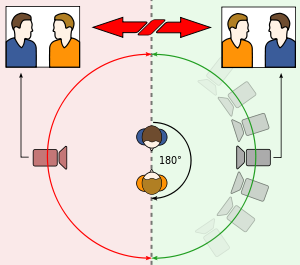
During the conversation taking place between the two girls and the mother in the cafe Jackson makes sure not to break the 180 degree rule so that the audience do not become disorientated or confused, allowing them to keep up with the pace of the conversation. Close ups are a generic convention of thriller films, allowing the audience to connect with the characters and the characters emotions to be expressed with ease. Jackson uses close ups during the cafe scene to show what the girls are feeling, their expressions are stone cold, showing no hint of emotion. This hints to the audience that something bad is going to happen and that the girls have mentally committed to what they are about to do. This is emphasised when compared to the upbeat nature of the mother, who doesn't gauge that the girls are almost expressionless, because the stark difference between the two emotional states shows a sense of foreshadowing.


As the three characters leave the cafe the non-diegetic soundtrack of Puccini's 'The Humming Chorus' begins in the background. This bit of classical music is dramatic but exquisite at the same time; this music helps to build tension amongst the audience although it seems to contradict the action and what is about to happen. Jackson is challenging generic conventions by playing this mellow music amongst the penultimate build up to the climax, it seems ironic but it could be perceived in several different ways, for example the soundtrack seems to create an ideal utopia for the girls, they are living out a dream world within this last scene. During this moment the screenplay is slowed down, allowing the audience see that these moments are the last few for the mother and so adding to the dream world.
This soundtrack plays right through until the mother is killed, this bears similarities to grand opera as the song is played during the death scene of Madama Butterfly and these scenes of death are linked due to their immense tragedy. Elements of the opera can also be likened to the final scene of Heavenly Creatures, for example in Madama Butterfly, the child is being taken away from the mother before she commits suicide and this bears similarities to the way that the child is trying to leave her mother in Heavenly Creatures, it is also similar because both mothers end up dying and both the children are left without mothers. Another way the two could be linked is that in Heavenly Creatures the two girls are waiting for the right moment to commit the murder just as in the way that in Madama Butterfly the woman is waiting for the return of her husband (who has fallen in love with another woman). Lastly, Peter Jackson could be saying that this film is worthy of a grand opera as the ending is so tragic, the story is so good and the ending so tragic almost entitles it to a play at the opera.


Jackson challenges the generic 'claustrophobic' locations that are so often seen in thriller films by using a very open location for the murder scene. Although the location is open, light and outside it is still isolated, meaning that the sense of fear is still present amongst the audience, fear is very important in some thrillers, as this is what keeps the audience hooked. Jackson still tries to create a generic claustrophobic environment by using a very narrow path, meaning that the characters have to work down in single file with the victim sandwiched in between, this puts the audience in her shoes. The fact that one of the girls is either side of the victim reinforces the idea that there is no going back now and there is no escape for the mother as she is completely isolated apart from the company of the two girls. 


During the walk down to the place where the murder happens there are a series of close ups (as previously said close ups are often used in thrillers and Jackson is making use of generic conventions to cement the genre), capturing a moment in time that tells the audience how each character is feeling at present, again slow motion is used to emphasise the mothers last few moments alive. The walking down the path could symbolise the girl's commitment but also the diminishing hope that their dreams will really become a reality. 
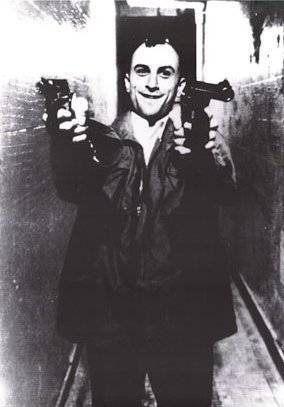
Lastly, Jackson challenges gender within the thriller genre by using two young girls, around 15 years of age, to commit the murder and as main roles throughout the film. This is so different to the generic characters in thrillers as they are usually male led, men do the murdering, for example Travis Bickle, played by Robert De Niro in the psychological thriller 'Taxi Driver' (1976). Heavenly Creatures shook New Zealand when it first came out simply because it was so shocking that two teenage girls could really do this and Jacksons depiction of the tale was quite graphic, challenging the typical representation of the average teenage girls.

Friday, 16 November 2012

Wednesday, 14 November 2012

The difference between the thriller genre and the action/adventure genre

Thriller

  • Thrillers are much more based upon reality, which is how fear is conveyed as the idea is that it could happen to anyone.
  • The plot lines are usually complicated and require thought to understand, this however can enrich the experience by providing a more in depth understanding of what messages the film is trying to convey.
  • Suspense is built up over time to ensure the audience are genuinely interested. 
  • Based more upon the characters and understanding them, rather than action such as car chases or explosions. 
  • Sometimes the narrative isn't linear, it's complex. This means that the plot could be told through flashbacks or be circular.
  • Audiences are usually males, aged 18 - 30 years old. The age is usually implied as most thriller films have an age rating of 18 to start with.
  • Some directors have begun to challenge generic conventions and use females for lead roles (such as Kill Bill)


This is the trailer for Fight Club (1999), it has a complex narrative and an interesting plot that has a twist, Fight Club requires thought.


This is the dystopian city location from the film Looper (2012), it is quite futuristic and from this shot looks bright and optimistic but in reality the back streets are still dark, dirty and full of crime. This shows similarities to the cities of today, but in the future the city has become even more undesirable, linking back to the idea of a dystopia.


Although The Dark Knight (2008) is debatable to whether it is a thriller or not, I felt that The Joker (played by Heath Ledger) was a dark character more fitting to the thriller genre. His character could be interpreted in several different ways, cold and calculated but spontaneous and unrelenting at the same time. The Joker provoked questioning from the audience in relation to what his motivation was, this is partially why he appears so ambiguous in the film.


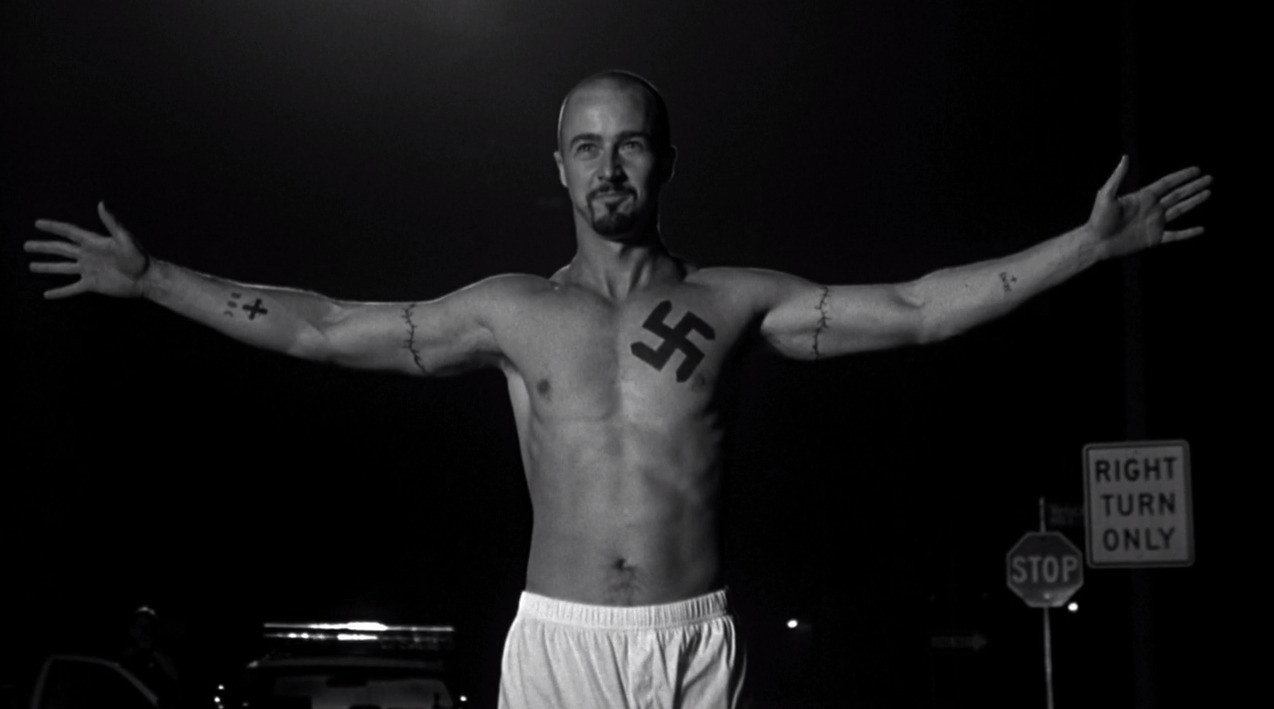
Black and white is used in American History X (1998) to represent flashbacks, this is an example of noir/chiaroscuro lighting. Note that Derek is partially consumed in shadow, showing his dark nature, this is achieved by non-ambient light which gives a spotlight effect. Edward Norton is known for playing characters with dual personalities, such as Derek in American History X and The Narrator in Fight Club.


The character in Drive (2011) is shown first to be gentle and caring, but as the plot develops and the people that are most important to him become threatened he takes matters into his own hands, stopping at nothing to achieve his goal. The line between right and wrong becomes blurred and a darker side to the character is revealed.


This scene depicts the two characters, Jules and Vincent, light heartedly discussing Europe and the metric system. They are on the way to kill some young men who owe money to their boss, Pulp Fiction depicts the demise of society in America in the way that the characters are presented, many have turned to crime in order to survive and don't really show much remorse whilst doing so.

Action/Adventure
  • Action and adventure films are much less real, they contain characters that seem to break the laws of gravity, therefore the realism runs thin.
  • Instead of focussing on the development of characters the genre usually focuses on big action, such as stunts, car chases, and explosions/gunfights.
  • The target audience for this genre are most usually boys at the ages of 12 - 18 as it appeals to the sort of video game market and the fantasies that come with it.
  • The plot is almost always linear, this allows the audience not to get caught up in it and directs the focus more onto the action.


This trailer depicts some of the cliches of an action film, big stunts, explosions and guns. When the two trailers are compared it is easy to see the differences.