
Friday, 18 January 2013

Type of Thriller
What Type of Thriller is our Film?
I would say that because of the events that occur in our opening it would be fair to say that the film crosses over two sub-genres, these being crime thriller and psychological thriller.
The film fits the crime thriller genre because of the fixation around the crime that is committed (murder) and also the shady meet up that revolves around the contents of the bag. As crime thrillers often focus on the villains instead of the police, it seems relevant as we focus on the killer (Bill) and also the two characters meeting up over the contents of the bag (John and Hanna). The claustrophobic city location is also reminiscent of crime thriller locations such as the city in 'The Killing' and 'Se7en'.
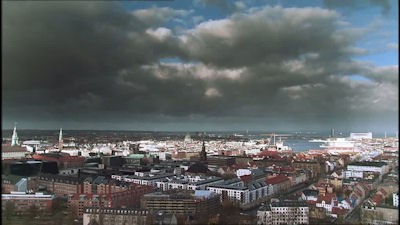 |
| Copenhagen, the city used for 'The Killing' |
 |
| Travis Bickle from 'Taxi Driver', a mentally unstable character that could be linked to Bill. |
 |
| David from 'Shallow Grave' |
Thriller Film - Plot Synopsis
Thriller Film Title - Transit
Plot - John is making his way into the multi-story car park with a bag on his back. He intends to meet with Hanna to hand over the contents of the bag, but unknown to both of them John is followed in by a suspicious van driver (Bill). Bill has a captivation with what’s inside the bag and will do anything to retrieve it, causing things to go awry for John. As John nears the meeting point things seem to be not as expected.Tuesday, 8 January 2013
Thriller Film Opening - Shot List
Shot
list:
- High angle shot of Jon walking up the
stairs with the rucksack.
- Close-up/ Tracking shot of a leaf
falling down and landing on the windscreen of the white van.
- Shot from within the van, camera
focused on the leaf and windscreen, shift in focus to Jon at the top of the
stairs walking around to the right.
- Extreme close-up of Bill's eyes (angry or emotionless
expression), diegetic sound of the van starting up.
- Mid-tilt of Jon entering the car park
stairwell.
- Tracking shot of the van going round
the corner.
- Long shot through broken window of the
van going into the car park (test shot on previous post).
- High-angle of Jon walking up stairs.
- Mid-shot of the third person checking
their watch, Match on Action close up of the watch (Maybe pan to white van in
the background).
- Close-up of Jon's feet as he turns the
stairwell.
- Low angle/ Tilt of Jon walking up the
final set of stairs.
- Mid-shot to Close-up of Jon walking
through the door.
- Point of view, Jon looking around
(Spots van, shot holds for a second).
- Long shot of Jon looking around.
- Over the Shoulder/ Tracking of Jon
walking up to the van with one door open, gets to the van see's third persons
watch on the floor.
- Close-up of the watch getting picked
up by Jon, has a smashed clock face.
- Close-up of Jon's worried face.
- Mid-shot/Tracking shot of Jon running
towards stairwell doors and throwing them open, camera movement shaking to
symbolize running/ add to the action.
- Mid-shot from other side of the doors
of Jon busting through and getting to the lift.
- Extreme close-up of Jon's finger
repeatedly pressing the down button.
- Medium close-up of Jon impatiently
waiting for lift.
- Point of view shot of lift doors
opening, third person slumped dead on the lift floor with a business card
placed on her.
- Worms-eye shot from third person's
perspective of Jon walking in an crouching down in front of her.
- Close-up on the business card whilst
Jon picks it up.
- Diegetic sound of lift doors closing,
shot from the back of the lift of Jon turning around.
- Just before the lift doors close,
close-up of a foot stopping the door from shutting.
Upon arriving at Anglia Square car park to practice some filming it was apparent that it had been closed. This meant we had to look around other locations to see if they would have the same effect and opportunities. We are communicating with the manager of the car park in order to see if it is possible to still use the car park, but if this is not the case then the shot list may be subject to change.
Thursday, 3 January 2013
Case Study - Kill Bill: Vol. 1 (Opening Scene)
Kill Bill: Vol. 1
 Release Date: 2003
Director: Quentin Tarantino
Genre: Thriller, action, crime
Starring: Uma Thurman, David Carradine and Daryl Hannah
Plot: The lead character, known as 'The Bride' was part of an assassination squad, lead by 'Bill' who is also consequently her lover. Upon realising that she is pregnant, 'The Bride' tries to free herself from her life of killing and finds a new lover who she intends to marry. On her wedding rehearsal 'Bill' arrives and guns down 'The Bride' due to his jealousy and anger. 'The Bride' awakens four years later to the fact that her baby is gone and she sets out to get revenge on 'Bill' and his assassination squad.

Kill Bill Vol. 1 - Opening Scene Analysis
Sunday, 16 December 2012
Case Study - Witness
Witness
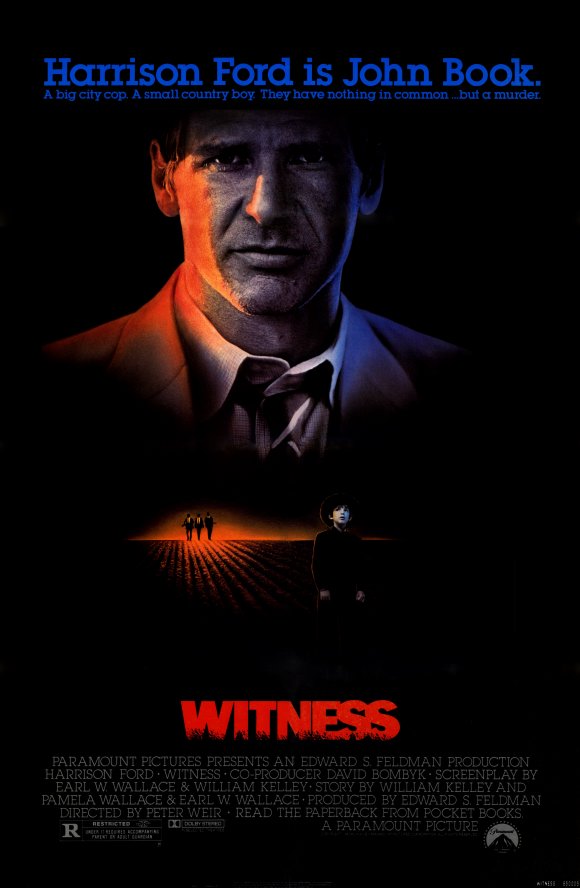 Released: 1985
Director: Peter Weir
Genre: Thriller, drama, romance
Starring: Harrison Ford, Kelly McGillis and Lukas Haas
Plot: A young Amish boy by the name of Sam Lapp witnesses a murder in the toilets of a train station toilet. He, his mother Rachel and a cop named John Book must go into hiding when the killers come after them.
 When looking at the user ratings on the IMDB it shows that women over 45 rated it highest. This could have been due to the lead female character and the underlying plot line of romance between her and John Book (Harrison Ford), especially as Ford could be seen as desirable to some women. Older women rated it higher than younger women, this is most probably due to the appeal of the characters, plus the film was probably not targeting younger female audiences when casting the actors.
Witness - Screenshot Analysis
When looking at the user ratings on the IMDB it shows that women over 45 rated it highest. This could have been due to the lead female character and the underlying plot line of romance between her and John Book (Harrison Ford), especially as Ford could be seen as desirable to some women. Older women rated it higher than younger women, this is most probably due to the appeal of the characters, plus the film was probably not targeting younger female audiences when casting the actors.
Witness - Screenshot Analysis
Case Study - Taxi Driver
 Case Study - Taxi Driver
Released: 1976
Director: Martin Scorsese
Writer: Paul Schrader
Starring: Robert De Niro, Jodie Foster, Cybil Shepherd
Genre: Crime, Drama, Thriller, Physiological Thriller
Budget: £1.3 million

Taxi Driver is about Travis Bickle, a supposed ex-marine who suffers from insomnia and possibly a psychological disability. He takes up a job as a taxi driver in New York, driving at night (due to his insomnia) and working in all areas of the city, including the most dangerous. Travis spends his days in seedy cinemas and questioning what has happened to society, with strong opinions about what is right and what is wrong.
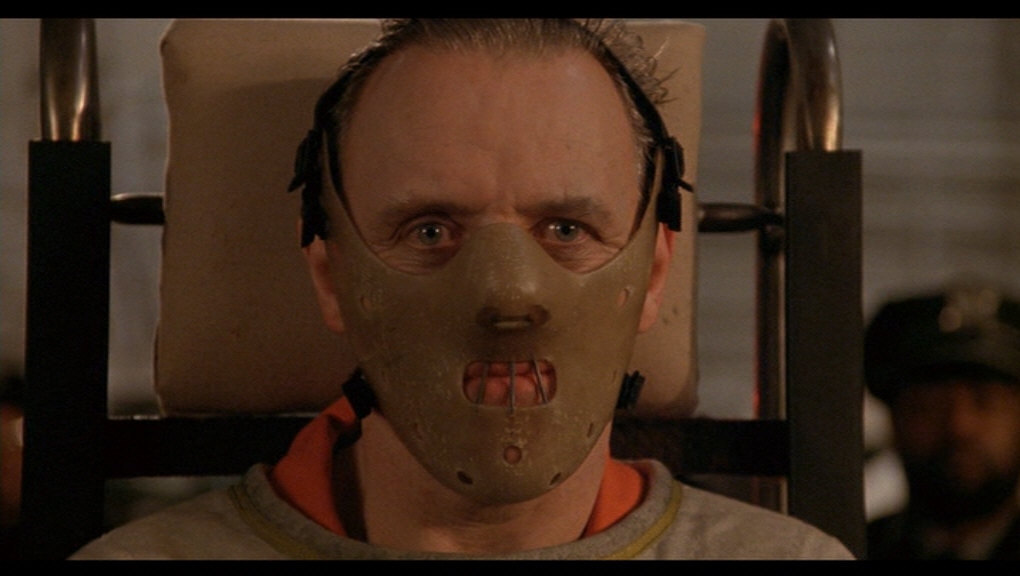 |
| Hannibal Lecter from Silence of the Lambs |
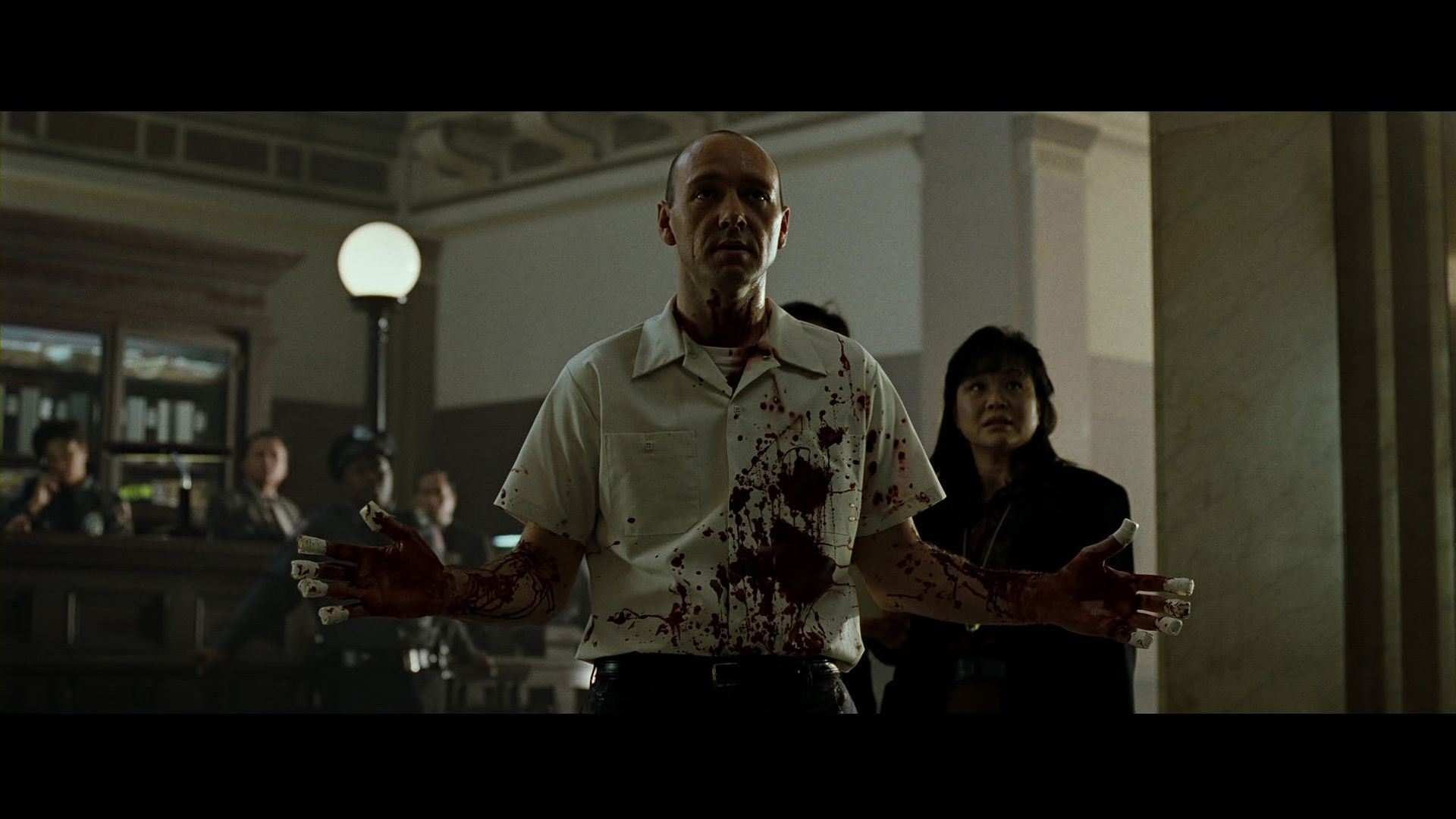 | ||||
| John Doe in se7en, this film applies particularly to Taxi Driver because of it's neo-noir qualities |
Travis descends into madness after being rejected by his love interest 'Betsy' but it could also be said that Travis really turns when Iris first gets into his cab and he is handed the $20 note, which he separates from the others suggesting that he views himself as a hero, intending to give the money back. This shows that Travis is becoming deluded when viewing himself as a hero as he loses his self-awareness which tests the audiences sympathy, therefore engaging them to the character which many thrillers aim to do in order to develop an in depth plot line.
Although the audience know that Travis was a marine in Vietnam, they don't know what actually happened in order to make Travis so fragile to the elements that surround him, thus provoking questions as to why Travis feels the way he does, another clever device that makes the audience feel connected to the character when trying to find out about his past from his actions in the present. His experiences at war must have had an impact on the way that he lives now, as they do on many men that go to war, and this perhaps helps to make Travis a much more feared character because of the way that he easily turns his anger into a ruthless soldier once more. This fear is very important to the thriller genre because it helps to keep the audience hooked and it signifies the genre. Another point of view to this is that Travis in fact never was in Vietnam, this could be derived from his limited knowledge of firearms and the way that he avoids talking about his experiences in the opening scenes. Travis could have created this back story to enable him to be the hero that he always wanted others to view him as, adding to the characters complexities.
When looking at the behaviour of Travis Bickle it would be fair to say that he is living in his own alternate reality, his own dreamscape. This can be seen by the way that Travis looks into his rear view mirror at the beginning and end of the film, most importantly during his last cab ride of the film in which he appears a changed man, implying that he is absent from reality and lost in his own thoughts. This is similar to the dreamworld created by the two girls in 'Heavenly Creatures' and is used to connote escape from the real world and the problems associated with it.
Taxi Driver - Shot Analysis
Subscribe to:
Posts (Atom)