Friday, 22 March 2013

Question 5 - How did you attract/address your audience?

In order to gain effective feedback for our thriller opening, Transit, I decided to give questionnaires to people after they had watched the film. This meant that I had real feedback and I was able to constantly refer back to it. Our audience demographic is 16 - 18 year old British males from white and ethnic minority communities. This is because the main character is from an ethnic minority and the antagonist is a white working class male. Ethnic minority youths, particularly since the 2011 London riots, have been negatively represented within the media; our film challenges this stereotype. Therefore our film will attract this stereotype. I decided it would be best to ask both females and males in this age group to watch the film and then answer the questions afterwards because it would give a fair representation of the audience that found the film most appealing and why. This became extremely useful because it enabled me to know exactly what the demographic identified with. It was more important to gather feedback from the males because they were the target audience; thus their response to what they identified with would be vital. I chose to gather questionnaires from 2 boys and 1 girl in between the ages of 16 -18, these are scanned in below.


I purposely sought after participants who fully ranged between the target ages of 16 - 18, with one participant being 16, one being 17 and the other being 18. Therefore I was able to collect feedback from the complete target demographic, not just people my own age.

When looking at the answers given it was mostly positive, with only a few negative comments; showing that Transit was overall well received by the audience. The film was successful in telling the story as the audience rated this element 4 or higher; therefore they were able to identify with the film through the narrative. Most people probably found it reasonably easy to understand because it was a linear narrative (meaning events go from the start to the middle to the end) instead of a more complicated narrative structure (such as a circular narrative) that included techniques like flashback. We decided to keep the narrative as simple as possible given we only had 2 minutes to effectively engage the audience; this clearly worked as the plot was understood without any great difficulty.

One aspect that was rated highly was the camerawork and editing of the overall film. Each participant who answered the questionnaire gave this section a 5; showing that the way that the film was shot made it more attractive and intriguing. When planning to shoot we decided to use our own DSLR's because they allowed us to shoot in 1080p HD, this gave a clearer/crisp picture which may have been why the audience found this element so appealing. The participants who answered the survey were surprised by the quality of the footage, meaning that they were more likely to carry on watching because it demonstrated that we had put a lot of effort into various camera angles and shot types. This was emphasised even further when I asked each participant to highlight the best aspect of the film and each time they circled camera work and added comments such as "good range of shots" and "really nicely shot, great lighting too"; clearly showing that my camera operating skills played a part in attracting the audience.

Another successful element of the mise en scene that the audience felt was engaging was the soundtrack that was used alongside the action. I made sure to look at the music that has been used in other thrillers that are similar to Transit, such as "Kidulthood" or "Drive" and then found our soundtrack. This meant the audience were attracted by the soundtrack as it was similar to other generic soundtracks they had heard from other thrillers. It was noted by the participants that the soundtrack also helped to set the pace of the action and was also effective in creating ramping tension towards the end of the sequence, particularly the scene in which Bill's boot stops the door from closing.

Soundtrack for getaway scene in "Drive". Notice how it helps to build tension progressively throughout the scene.

When it came to addressing the audience we ended up doing it in a detached style because the audience may have found it difficult to identify with the character of John due to his callous or unfeeling response to Hanna's dead body in the lift. That left us having to address/attract the audience through the use of camera angles, style, colour grade and cliffhanger. The audience will have been attracted through the character of Bill however, this is because he is rarely seen and is shown to be a very ambiguous character. This provides an enigma of mystery and menace which will have helped to attract the audience because there is still more to be revealed about Bill. Bill provides unanswered questions in the opening, causing the audience to speculate and prevent them from loosing interest.

Hanna in Transit, displaying a Lisbeth Salander like costume.
The audience may have been attracted through the way that the characters costumes reflected much of what the youths of today are seen to be wearing. This may have enabled the audience to identify with the characters more due to their similar attire. For the character of John we took inspiration from "Kidulthood", "Top Boy" and similar British gritty dramas/thrillers because it captured the sort of class that may be attracted to our film. When looking at the costume of Hanna we thought about challenging the generic conventions of the female stereotype by basing her on Lisbeth Salander from the Millennium Series. This may have been particularly helpful when trying to attract a wider audience as we could address a female audience through the appearance of the character of Hanna. If the target audience were able to identify with any of the characters it would most likely be John because he is a male aged between 16 - 18; therefore he represents that target demographic that we were trying to get to identify with Transit. In addition the audience may have been attracted to the film by the way it was shot through the view of John, with one of the participants stating that it "made me feel I was the protagonist at times" thus the audience were able to identify with the film due to being placed within the mise en scene.

Despite Hanna being killed rather early on in to the film, the female who answered the questionnaire said that she would like to see the rest of the film regardless. This was good to know because it meant that we had managed to make the film attractive to the female audience through other aspects within the mise en scene, particularly the wide "range of shot types". Another factor that may have been appealing to a female audience was the attraction to the young male character, John, because of his appearance.

One of the criticisms pointed out by the participants in the questionnaire was that the colour grade didn't really make the film seem gritty enough. Although I had used the RGB curves and fast colour correction to alter the colours slightly, I could have used these tools more effectively to give the film a better colour grade. For example, if I had enhanced the green or blue tones more then the footage may have appeared colder or more grittier; thus giving the overall sequence a more cinematic and atmospheric feel. If I had completed this aspect to a higher standard the audience may have been able to identify with the film more because it would have similar colour palette as similar films such as "Emulsion".


Notice how the colour grade used in "Emulsion" makes the film more appealing aesthetically and it adds a dark mood/gritty feeling; thus it is clearly making use of the generic conventions. If I had also applied a similar colour grade as seen in the above picture then the audience may have felt more attracted to the film because it would posses more of the generic conventions that they might have perhaps expected.

One of the most important elements of the film was the cliffhanger because it acted as a hook for the rest of the film. The scene in which Bill's boot stops the elevator door from closing acted as the hook for our film. We used this cliffhanger to ensure that the audience wouldn't lose interest in the action and would want to continue to watch the rest of the film. This also helped to provide many unanswered questions and a burning desire to know where the plot goes next.

Overall the participants rated Transit 9 out of 10, clearly showing that the film was able to attract the demographic that we had originally targeted through the use of particular generic conventions such as location, camera angles/shot types and character. It was also pleasant to find out that the female audience were also interested in the film and possibly wanted to see more; most probably due to aspects of the mise en scene such as lighting and sound.

Tuesday, 19 March 2013

Question 2 - How does your media product represent particular social groups?

This image depicts the stereotypical view of young Afro Caribbean
youths as portrayed in the media.
The opening to our thriller film, Transit, represents several different social groups. One of the most important and notable is that of the young Afro Caribbean male, represented by John. This representation of of a deviant youth from an ethnic minority may offend ethnic communities in that it reinforces the negative representation of this group by the media. For example, after the London riots many young Afro Caribbean males came under scrutiny for supposedly being at the root of the events, especially as they were shown largely on the news when the riots were actually happening.

A stereotypical view of young Afro Caribbean males and the male youth in general, shown in "Adulthood"

We decided the costume of John should be very similar to what many of the younger males were wearing around these times and also what a lot of young males still wear, particularly in urban areas with high crime rates. Therefore we chose John's costume to be primarily dark in colour, we also made sure that John was wearing a hoody and a hat in order to show that his character may be attempting to conceal his identity; much like the young males in the London riots, who were obviously up to no good. John's costume helps to portray a realistic representation of a large proportion of the male youths appearance as of today. John's concealed appearance could lead the audience to make the assumption that John is up to no good or perhaps the character with a lack of morality; thus reinforcing the common stereotype of the young Afro Caribbean males.

The character of John, showing his dark costume complete with hoody.
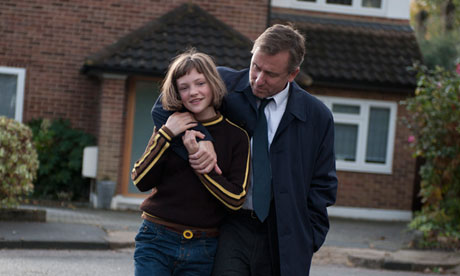
Combo from "This is England"
In saying this however, we also attempted to challenge this generic stereotype by making John seem like the vulnerable character by placing him within the large isolated car park; showing an obvious contrast in scale; the car park is a very intimidating, claustrophobic space. In addition, John is also portrayed as having less power than the character of Bill, a 40 year old white electrician; thus the stereotype is reversed and the older white British male is to be feared more so than the young Afro Caribbean male. This switch in the stereotypical representations of ethnicity can also be seen in the British drama "This is England" (which also aims to target the same demographic as Transit does) in the characters Milky and Combo. Milky is the only black member of the gang, although he is kind hearted and friendly; thus he challenges the prejudicial stereotype. "This is England" continues to reverse the stereotypes of ethnicity by showing the older British white male, Combo, as a violent racist. These representations of ethnicity are very similar as to those shown in Transit because John is hunted by Bill. If we were to develop the film further then we intended to make the character of John subject to racism, therefore the stereotype would be reversed; much like "This is England".

John seems to be unmoved by the discovery of the dead body of Hanna, this suggests to the audience that he has a lack of empathy and has possible criminal tendencies; thus the stereotypical representation is once again reinforced.

Gilda, a typical representation of femme fatales.
The representation of females within film is reasonably limited in Transit as the only female character is Hanna, who is a minor role in the opening scenes. This is clearly displayed by the lack of screen time she has; thus she is not dominating the mise en scene, showing a more classic representation of females in the thriller genre. However, we felt it was important that we tried to steer away from the generic representation of females because it has been overused and gender equality should be promoted as much as possible, especially in film. We achieved this through the use of costume, Hanna is not shown to be revealing or provocative; thus the audience can see that she is not overly concerned with her image and is more focused on the task in hand (meeting with John and getting the contents of the bag). This representation challenges the stereotypical view of women in film because they are usually seen wearing costume that reveals a lot of skin or they are seductive/tempting to the male characters, such as Gilda from "Gilda". Often females are also shown to be passive victims, meaning that they put up no resistance to their attackers. This representation depicts pretty blondes who dress glamourously in order to attract/seduce the male characters in to danger; something that the character of Hanna is very far from.

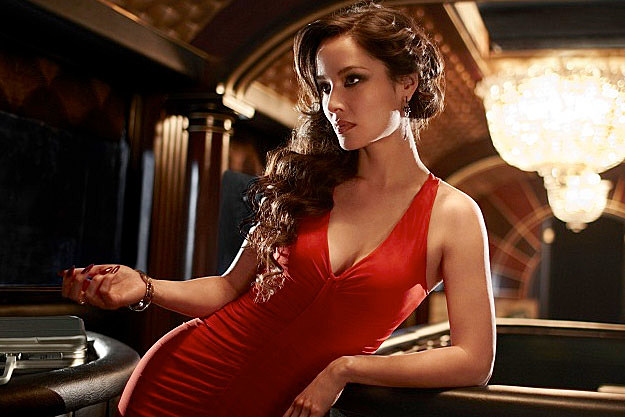
Severine in "Skyfall"
Although the representations of women in film have been progressing away from the femme fatale stereotype, there are still recent films that depict women as weak and inferior to men. For example, in the most recent James Bond film "Skyfall", M (played by Judi Dench, an older aged female) is the head of MI6 but as the film progresses she is portrayed as a weak character and is eventually killed. This is a problem for the progression away from the stereotypical representation of women in film, especially as the divide in gender is reinforced towards the end when a white British working class male assumes the position of M. As a result of this, the female audience will be much less likely to want to continue watching the Bond franchise as the representation of women is not shown to be changing in any shape or form. As with "Skyfall" and the rest of the Bond franchise, the femme fatale representation is almost always shown in the films through characters such as Money Penny, Pussy Galore and most recently Severine. Again this will not help to reach a female audience.

Ralph Fiennes in "Skyfall" replaces M as head of MI6.

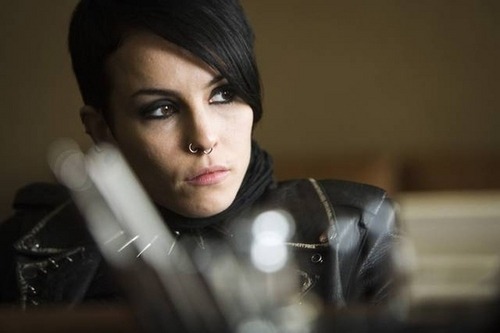
We got the name Hanna from the thriller "Hanna" in hope that it would help to change the way that the female character is perceived by the audience. Hanna (from the film) is shown to be independent and capable of fending for herself and is of a similar age to Hanna from our film (Transit); therefore we tried to use this link to challenge the generic representations of young women in the thriller genre. We also largely based the appearance of Hanna on Lisbeth Salander (Noomi Rapace) from The Millennium Series because she represents a progressive step towards changing the stereotypical representation of females in film, particularly in appearance and character development.

Unfortunately Hanna is killed early on in the film and so the generic representation of females is restored, thus we used the classic stereotype of females to allow the audience to identify with the genre of the film. If we were to develop the film then we could continue to challenge the representation by using flashbacks in order to further develop the plot line concerning Hanna. This would give us the opportunity to represent Hanna as a stronger lead character.

Lisbeth Salander, played by Noomi Rapace in The Millennium Series. Notice how her character bares similarities to that of Hanna from our thriller, Transit.


Sunday, 17 March 2013

Question 1 - In what way does your media product use, develop or challenge forms and conventions of real media products?

Our film, Transit, aims to use generic conventions to establish the thriller genre and pay homage to other classic thrillers of its type. We also maintained that we had to try and challenge some of the generic convetions shown in our film in order to make it memorable and intruguing, as a new idea or concept is often something that makes a film stand out from the others. In order to achieve this, various aspects of the mise en scene were emphasised to indicate and connote the use of some generic conventions and also to challenge others.


Tick of the Clock is used in the opening scene of "Drive" in order to build tension and suspense.


"Emulsion" was influential because it is set in a very similar location and much of the action takes place within the car park.

Tuesday, 12 March 2013

Question 3 - What kind of media institution might distribute your media product and why?


User ratings for "Ill Manors"
User ratings for "Kidulthood"
To distribute our film I would approach a company like Revolver Entertainment because they distribute films such as "Ill Manors" and "Kidulthood". Both of these films are similar in style to our film (Transit) and also share the same target demographic of 16 - 18 year old British males.

However, females under the age of 18 gave "Ill Manors" the highest rating. Our thriller could possibly relate to this in fact that we have an ambiguous female character who may help to attract a female audience. However the female character is killed very quickly and so the female audience may lose interest, the only appeal they may have to the film is the male actors.

 Our thriller has 'independent spirit and flair' because of the use of artistic camera shots and intriguing editing style; thus it would fit in with the ethos and distributing style of Revolver Entertainment. Revolver distributes films both nationally and internationally as they have offices in London and Los Angeles. They 'blend international reach with extensive local knowledge', which is why I think that they would be ideal distributors for our thriller; Transit aims to reach a British audience of around 16 - 18 years of age and so Revolver would know how to best target that audience with their strategies from previous experience with films such as "Kidulthood", "Shank" and "Ill Manors". Another positive is that they have the option to distribute internationally, so if our thriller film gained acknowledgement or was successful it could be shown in other countries that may be interested in the genre.

The local knowledge that they posses would be useful because they will have worked with smaller/independent companies before on low budget productions; thus they would most probably be more open to distributing our thriller due to working on similar projects before and having the knowledge of how the film industry/market react to these sorts of films. The films that Revolver have distributed before ("Ill Manors" and "Kidulthood") are similar to our thriller because the characters are alike. For example, John from Transit is much like Sam from "Kidulthood" in the way that they have a similar appearance (dark costume, hoodies, jeans and trainers) and also have similar plot lines (themes of drugs and violence). The locations seen in these films are often gritty tower blocks and urban concrete sprawls, again these generic conventions have been used in our film to connote the genre. Therefore Revolver would be able to recognise that Transit is in the style of films that they have distributed before. Revolver claim that they are 'experts in youth entertainment' therefore they would be a primary choice for a distribution company because they will have worked with young people before, our film crew and cast were primarily young people and so it would be useful to have that expertise provided by Revolver.


Seeing as they are 'experts in youth entertainment' they will also know how to pitch a film that targets a youth audience, this audience will be very similar to the demographic that we target; thus Revolver would be able to market, promote and distribute our film in the most efficient way possible to a younger audience.

Revolver are pioneers in digital distribution, this would be appropriate for our film because it would lower the costs of distributing; therefore it could be distributed to many more places if it was on a digital hard drive instead of on 35mm film reels. It would also reduce the effort and cost of shooting in 35mm, instead we shot on digital cameras and so Revolvers means of distribution would be able to accommodate this effectively. Not only would Revolver be able to digitally distribute our film to cinemas, they would also be able to distribute our film online to a wide range of companies and social media sites. For example, they have an extremely successful YouTube channel and have links with LoveFilm, Netflix, Sky and iTunes.

Here is a link to Revlover's video, describing their aims - http://www.revolvergroup.com/uk/article/view/about_us

Our film is independently produced and is shot in an art-house fashion; I would target/expect Cinema City to be the most likely cinema to screen our film. This is because they are known to showcase independent productions and low buget films such as "Robot & Frank"; thus we would have more of a chance if they had screened similar films before. Cinema City claim 'to showcase a diverse and vital range of films' and this would help to convince them to show our film because they maintain to show independent cinema, foreign cinema, world cinema, art-house and other alternate types of programming. For example they are currently screening Broken, winner of the Best Picture at the British Independent Film Awards. Most importantly they have been known to show short films, this would be an excellent link because Transit is a short film and thus Cinema City would be more open to showing it. Cinema City have hosted screenings for many short film events such as NFF: An Evening of BAFTA Nominated Short Films - http://www.picturehouses.co.uk/cinema/Cinema_City/film/Norwich_Film_Festival_Presents_An_Evening_Of_Bafta_Nominated_Sh/
I have also included a link to all of the events that they have held for short films and film festivals - http://www.picturehouses.co.uk/cinema/Cinema_City/Search/?header_search=short&type=content&landing=nor

Broken, winner of Best Picture at the British Independent Film Awards.
Cinema City has an obligation to provide education and this would link well with our production, seeing as it has been made for an AS level coursework project. Cinema City would be good with helping young people to screen their films, especially those in education because of their policies and dedication to helping educate young people about films.

Digital technologies are extremely helpful to a small independent production group such as ourselves because they offer effective distribution for next to nothing in terms of money. These new technologies allow audiences to consume film through alternative platforms that would not have been available a few  years ago, such as LoveFilm, Mubi and Netflix. These sites offer digital distribution and are a good way to gain recognition. In addition to this their services can also be downloaded on many digital devices such as mobiles, games consoles and MP4 players alike; this will help to reach a larger market because of the increasing availability of applications.

 Distribution and promotion can also be aided by the use of social networking sites such as FaceBook and Twitter because both of these sites have access to an extremely large audience and creating a page is most usually free (or costs next to nothing). Creating a page could help to distribute/promote our film because we can use it to share links to the film and show other materials related to the film, all of which would be available to anyone. Revolver Entertainment utilise social media when promoting their films. Sites like FaceBook and Twitter also have the option for advertisement so creating a poster for our film could also greatly help in the distribution/promotion. Again these social media sites also have applications that are available on mobile devices; thus broadening the audience that we are able to reach. Using Video-On-Demand services, such as LoveFilm and Netflix, would be a more efficient way of distributing our film when compared to the more 'classic' forms of distribution (DVD) due to the massive decline in the sales of DVD's both in sales and rentals. In contrast to this the sales of films on Video-On-Demand services has dramatically increased over the past few years and so it would be best to use this to advantage.

There are many film competitions and workshops that can be used to showcase and distribute our film. A brilliant example of an organisation that works with young people to achieve their potential are First Light. They specialise in working with people aged 5 - 25 from a range of backgrounds to offer them realistic progression routes to a sustainable career in the film industry. Another great opportunity for young people to take part in is the BFI Film Academy which helps to develop the talent of young people and boost them into a career in film. Film competitions are also a great way to distribute films because they allow other people with similar interests to see your work and a deal could be made based on what they have seen at the festival/competition.

Saturday, 9 March 2013

Question 6 - What have you learnt about technologies form the process of constructing this product?

Question 6


Canon 550D
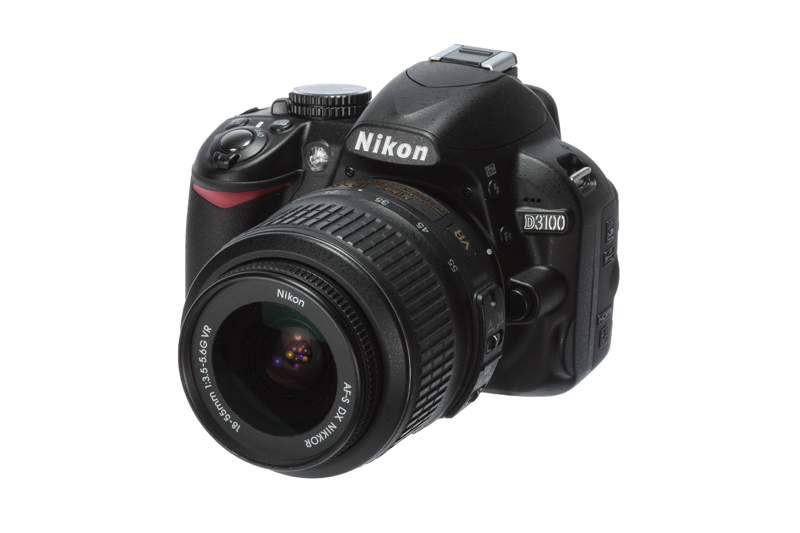
Nikon D3100
Although we had the option of shooting on the cameras provided by the school (Canon Legria), we opted to use our DSLR's instead. These were a Canon 550D and a Nikon 3100. As these were both personal camera's we already had an extensive knowledge of how to operate them and what they were capable of in terms of both still shots and video. We chose to use these camera's because they offered us the opportunity to shoot in 25 or 24 frames per second (fps) and also allowed the choice of interlaced or progressive video. In addition to this the DSLR's offered 1080p which meant that we could record in the highest definition, allowing crisp picture, clarity and sharp details. I used my DSLR to take the still shots for the location planning, it gave us a good idea of what it would look like when filmed from the camera and also gave us a good sense of the sort of camera angles that would work best. I have embedded some examples of the shots below.
Shot of the interior of the car park, displaying some non-ambient noir lighting.

Shot of Anglia Square car park, a location used in the thriller.
One of the best aspects about using the cameras was the fact that they had manual lenses, this meant that we were able to focus the camera manually and get some great shots that included a focus pull. Switching focus in shots helps to give the footage an intriguing look and can also help to offer a larger depth of field. We did use the focus pull in the final cut of Transit several times. I have embedded the final cut, an example of a focus pull can be seen at 1:20 to 1:24 and I think it helps to add tension as the audience are placed within the action. Researching films and looking at examples of different camera shots has really helped me to become better at being able to portray emotion through film and deciding which shots convey the mood that I want to get across to the audience. An example of where a shot is used to convey mood or emotion can be seen with the extreme close up shot of the boot in the elevator door (2:00) because it makes the mise en scene feel claustrophobic and intimate.

We encountered a problem when editing the footage in post production, one of us had shot at 24fps and one of us had shot at 25fps. Fortunately Premiere Pro was able to create a sequence that allowed the footage to flow smoothly without any lagging and the audio matched up nicely too.


I also already had a tripod due to using it for my photography so this gave me some prior knowledge on how to set it up/use it effectively. The Tripod that we used was a Vista Voyager. It is reasonably tall so it meant we could use it for a wide range of shots, including low angles and close ups. The benefits of using a tripod were the stability of the footage, there is no wobbly footage so it does not take away from the overall image. The tripod also came in handy when using panning shots as it gave a smooth arc which allowed us to follow a subject efficiently. A good example of this is one of the opening shots of the van driving of towards the car park (0:37 - 0:42).
Brightness & contrast levels allowed me to make some scenes clearer to the audience.

RGB curves, an effect I used to change the colour grade of the footage.
Fast colour correction, another effect I used to change the appearance of the raw footage.

The only previous experience I had with Premiere Pro was editing the preliminary task. This gave me a very minimal amount of knowledge, I knew how to import clips, set in and out point and put them together in the timeline. I also had briefly touched up on video transitions such as fade to black and cross dissolve. For the thriller I decided to try and learn more in depth about what the software could offer and how I could make the footage look as best as it possibly could by using effects and colour correction/grading. An important part of the editing was making the footage look gritty and dirty as to fit in with the genre and generic conventions that come along with it, I achieved this by using RGB curves and the fast colour correction tools/effects. Luckily the layout and effects were very similar to Photoshop, which I have had quite a lot of experience with and so I didn't have to learn too many new things in order to be able to create the sort of effects that I had envisioned. Another important effect that I harnessed was the ability to change the contrast and brightness of a bit of footage, this was hugely helpful in the scenes that were a bit too dim and also in sharpening up the footage to make it appear darker/grittier in some areas.

One thing that I have learned from the process of editing my film was how to edit and change the audio/sounds because this was not something that I paid a lot of attention to when I was editing the preliminary task. However with the thriller a soundtrack was needed, so I had to learn how to import this into the project in Premiere and how to edit bits of it so that it would fit in with what was being shown on screen. A good example of this is during the opening scenes when the picture cuts away at the same time as the music plays a particular sound/note (0:18 - 0:22). Alongside the non-diegetic sound of the soundtrack, I also had to think about the diegetic sounds that we had recorded with the cameras when filming. In some places I had to lower the sound levels because the wind was causing the audio to clip (the sound recorded would not be able to be used) and thus it was taking away from the overall quality, but due to playing with the volume and levels I was able to sort this out. In other places I wanted to make the diegetic noise louder because it was either necessary for the plot or it strengthened the mise en scene, this applied particularly to the sound of the engine being started (0:25 - 0:28). Unfortunately the sound still was not clear enough, so I used Freesound to find an audio clip of a van engine starting and simply deleted the original audio and replaced it with the clip from Freesound. This gave the scene a greater and more intense mood.

During the post-production/editing stage I also wanted to learn a bit more about the transitions, both audio and video. I utilised the video transitions at the beginning and end but I didn't want to use any during the film because I felt it would take away from the action and disrupt the flow; thus I used primarily hard cuts to keep the action raw. In addition to this I also used audio transitions, something that I had not used before. I used the constant power crossfade to dampen out the diegetic sound at the end of some clips when cutting away to others so that the scenes merged together much more smoothly and the change in ambient sound/atmosphere was not so noticeable. I also used the same effect at the end of the film so that the soundtrack would gradually get quieter as the picture faded to black (2:07). I felt that this would help to get across the idea that this was the opening to a feature length; therefore the music fading out would help to transition into the next scene. Finally I looked at adding in titles, although I had already touched upon titles in the preliminary task I felt that there was more to be learned. The opening title (Electric Productions) slowly zooms/increases in size, I achieved this by creating keyframes and then enlarging the font size so that it would gradually zoom (0:10 - 0:12).

The ability to embed videos from YouTube has been a great benefit because it has allowed me to analyse certain clips from films and use videos for case studies and research. YouTube also allows access to thousands of openings to thriller films; thus it helped to be able to watch these because it gave me knowledge on how to captivate the audience within the first 2 minutes. YouTube is awash with short films made by independent channels, it is interesting to watch the short films made by these people because it shows what is realistic with a small budget and a small time frame. Sometimes the best films are the independent shorts as they are much more artistic. For example, I was able to find the opening to "Kill Bill Vol. 1" and analyse the certain aspects of the mise en scene with ease. I have embedded the video below.


Viewer ratings for "Drive"

Another online source that has greatly helped me out for things like case studies and thriller research is the Internet Movie Database (IMDB). It came in handy for finding out initial information such as director, producer, year, genre, actors, ratings/reviews and other important information. One thing that I learnt that came to be very useful was the ability to view the demographic that rated a film the highest. For example, the film "Drive" was rated an average of 8.4 by males under the age of 18, perhaps suggesting that this was the target demographic. This helped me out because I was able to view which films our target audience rated the highest and then see why they rated said films highly.

Before starting this project and the media studies course, I had never used Prezi. However this changed as I quickly got to grips with using Prezi and created a mind map style case study for "The Killing". I found Prezi to be useful because it allowed me to use several different media formats such as pictures and videos, together on one resource. To begin with it was difficult to use because the instructions on how to do basic things (such as animating/guiding the audience around the Prezi) were not clear and the minimalist design meant that I had to play around with it for a while in order to be able to create a aesthetically pleasing presentation. Here is a link to the Prezi I made for "The Killing" - http://hamishmedia.blogspot.co.uk/2012/11/notes-on-killing-trailer-for-season-1.html

For many of my case studies I started using PowerPoint to analyse screenshots as it gave me an effective and familiar way of laying out the pictures and then annotating them with ease. I did not learn any new skills when using PowerPoint because I had been using it for so many years, therefore the basic skills were already there. To get the PowerPoints onto the blog I used a website called Scribd, this allowed me to embed my presentation. It was interesting learning how to use the website and its various features, especially the ability to view other peoples work/presentations on a wide range of subjects but most importantly film. I have embedded a PowerPoint on "Essex Boys" by embedding it from Scribd.

Teacher comment on one of my posts.

I had used a blog (Tumblr) previously during work experience to keep a record of what I had been doing, so I had a basic understanding of how to create posts and use the html to embed things such as videos. I have also been using Tumblr to keep track of the work that I have been doing or my Silver Arts Award with the BFI Film Academy. Blogger is different to Tumblr though so it took a little time to work out how to change the theme of the blog and create labels etc. I have thoroughly enjoyed using a blog to do my coursework on because it allows a lot more freedom with the use of things like Prezi, Scribd and embedding videos, which I wouldn't otherwise be able to do. Having the access to this technology has made things a lot easier; using pictures and clips to illustrate and demonstrate my points has strengthened my posts. The thing that I have found most useful about using a blog is the immediate feedback/comments that I can receive from my teachers; thus I don't have to be in school to be able to communicate with them if I have a problem or want a bit of work marked. This also allows me to quickly make changes to improve my posts.

HTC maps, I found this useful on my phone in order to find directions
to locations and give directions to others.
An important aspect of the shooting/production days was that we all knew where to go and when to be there. To make this process easy we used mobile phones in order to be able to contact one another if any problems arose, such as getting lost or running late. This came in handy one particular time because one of our actors wasn't completely sure on how to get to one of the filming locations; thus I was able to give directions making the process a lot easier.


To find the soundtrack for our thriller we initially used YouTube to find music that fitted with our footage and built tension. After finding soundtracks that gave the desired effect I went on to Audio Network and used the various searching filters to find 4 possible tracks. I looked at the mixes of the soundtracks to see if there were any stripped down instrumentals that ramped up the tension and helped to set the pace of our film. When I had finalised the soundtracks I downloaded them to my iTunes and then opened them up in Premiere via the media browser, thus allowing my to easily drag and drop the soundtrack into the sequence. I also used a sting towards the ending (1:53 - 2:09), which I found on Freesound. I used the same process as when retrieving the soundtracks and then put it onto the timeline in Premiere, however I used a crossfade to subtly introduce the sound so that it did not disrupt the miss en scene. I have embedded a YouTube clip of one of the soundtracks that inspired our decision, it is 'Tick Of The Clock' by the Chromatics. Here is the link to the soundtrack that we used, from Audio Network - http://www.audionetwork.com/production-music/for-whom-the-bell-tolls-3_61166.aspx


I used an SD card to store the recorded footage on, there were many benefits to this because they enabled a large capacity of storage and a small size; making portability less of an issue. I only encountered one problem when using the SD card, half way through filming my camera wouldn't record anything longer than 5 seconds of footage even though I had space on the card. This was because I hadn't formatted the card after it had been completely filled, therefore it wasn't able to keep up with the footage being shot. I formatted the card in the camera and the problem was solved.


Storyboard during the early planning for Transit.
To be able to show some of the written work that I had done as planning I used a scanner to turn the hard copy into a digital copy. This came in handy when I had to upload storyboards. An example is to the right.


Thursday, 7 March 2013

Character Profile - Bill (Antagonist)

Character name: Bill
Actor name: Richard Turner
Age: 39
Occupation: Electrician


Why is Bill the antagonist and what influenced his creation?


Bill is a character that shows no signs of emotion or remorse; this is illustrated through his cold stare that is held continually within our thriller opening. Additionally, his occupation as an electrician is a further connotation of his moral ambiguity; this is as it suggests that he is not afraid to get his hands dirty and will continue to act until the job is done. Furthermore, men who have jobs in labour intensive industries such as building, plumbing and electrical work are often perceived as "tough" or "intimidating", which therefore gives the character more of a gangster or hard man image. 

One character that Bill is influenced by is Arby, a hit-man portrayed by Neil Maskell in the TV thriller "Utopia". This is as when looking at Arby's aims we were able to relate these around Bill's objectives i.e. Both characters are out to obtain something important (be it an enigma or a manuscript) and they will go to inhuman lengths in order to get what they want. In addition, we were able to establish Bill's expression through the inspiration of Arby as we wanted our character to look psychotic and intimidating.

Arby from TV drama/thriller "Utopia"

Costume
Theis Birk Larsen from "The Killing"
Originally we had planned the whole costume for Bill, we had taken inspiration from several similar British TV thrillers/dramas and British gangster films. We had included a beanie, this came from the first episode of "The Killing" because of the character 'Theis Birk Larsen' wears a similar hat. This character is shown as an authority figure and is also suspected as the killer, his stature is also intimidating and exerts power.
Bill's Jacket
We also made Bill wear a large jacket as it makes it seem as though he is trying to conceal something, this could be a weapon or some other unknown object, which adds to the sense of an enigma. The large jacket also helps to signify the genre as many British gangster/crime thrillers often feature the 'hard man' wearing a large jacket. For example, 'Big Chris' from "Lock Stock and Two Smoking Barrels" is seen wearing this leather jacket which makes shoulders seem broader and his overall image much more intimidating and dominant.


Big Chris from "Lock Stock and Two Smoking Barrels"
The only part of Bills costume that is actually seen in our thriller are his feet and so we had to make the right decision to make Bill seem powerful and dominant just by his footwear. We decided that Bill would wear steel-capped work boots in order to fit in with his supposed occupation as an electician. These boots also symbolise that he does not care about his appearnce as much as he cares about his job and the ability of which he is able to complete his goals/objects. The boots Bill is seen to be wearing could also represent his personality, rough, cold and threatening.


Boots worn by Bill


Tuesday, 5 March 2013

Question 4 - Who would be the audience for your media product?

Question 4

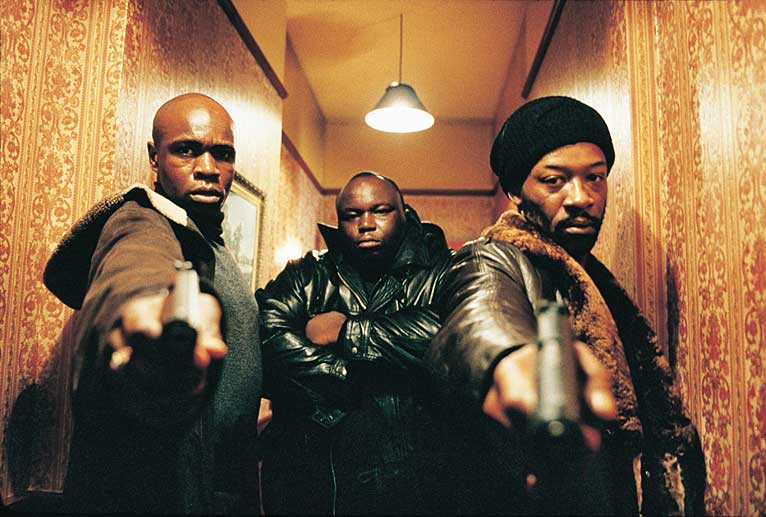
Sol, Tyrone and Vincent from "Snatch"
Transit aims to target the demographic of 16 - 18 year old British black and white males because the main character is within this demographic and dominates the mise en scene for most of the film. When trying to gain a profile of the audience we thought about what kind of media products they would consume, focusing mainly on film and TV. 16 - 18 year old males usually enjoy watching films such as "Misfits", "Skins", "Snatch", "Fight Club", "Top Boy", "Kidulthood" and "Utopia". These media products are often liked by the 16 - 18 demographic because of elements such as characters, locations, actions, themes and soundtracks. Some of these were taken into particular consideration when we were thinking about our target demographic.

User rating for "Kidulthood", the target demographic of our film (16-18) rated it the highest
We were able to get the target audience to identify with Transit because of the characters seen in the short film. Sol and Ell are both within this age group and so the target audience should be able to relate to and identify with the situations that these characters find themselves in, particularly that of Sol (who plays John). John finds himself in a situation that he can't control and is out of his comfort zone, the audience don't know why but he could of been pressured into performing the task of dropping off the bag. The bag is also an enigma as the contents aren't revealed to the audience, but it could be interpreted as drugs. Drugs are becoming more and more common amongst young people, both as users and also as dealers, and are becoming freqent in most circles of friendships; thus it is unusual these days for teenagers not to be placed in a situation that involves drugs. This will mean the target audience will be able to relate to and identify with the situation of the character John. The action is seen through the perspective of John and also revolves around John, this is appropriate for the target demographic because they are young males, as is John. The audience will be able to identify with the film from this point because they will be seeing the action unroll as if it were actually happening to them. The action seen is also quite highly strung, especially the murder, which is often sought after by this audience and so they will be able to connect the action from Transit to other films that contain similar action/events.

Lisbeth Salander from "The Girl with the Dragon Tattoo"
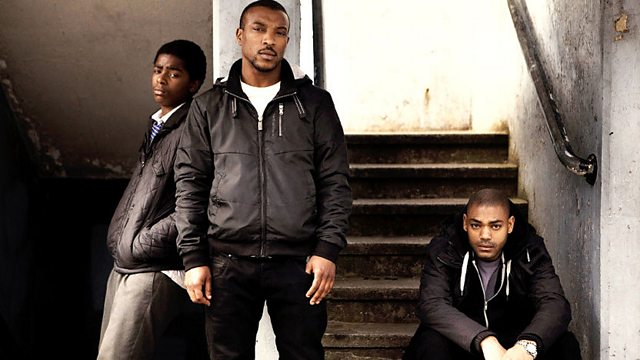
When thinking about the best way to capture the target demographic we looked at other media products that were similar to ours and also targeted a similar audience to us, for example "Top Boy", "Misfits" and "Kidulthood". Looking at the characters in these gritty dramas/thrillers helped us to build a character profile that would appeal to an audience of around 16 - 25, this included the costume and behaviour of the character. For the costume of John we took inspiration from "Top Boy" and "Kidulthood" due to the similarities in the class/status of the characteres to that of John and the way that they dress. The costumes seen in these media products and the costume of John in Transit reflect much of the fashion that can be seen in the young urban youths of today, this would again help to make the audience able to identify with Transit through the characters because they wear similar attire. Ell, who is playing Hanna, is shown to have more status than John because she is who is supposed to receive the bag. This could help to attract a wider audience and also to identify with more of a female demographic because the female character is shown to be of a higher status and in more of a powerful position than John. When naming Hanna, we looked at the thriller "Hanna" because the main character is a strong 16 year old female who can handle herself, but also has a sense of vulnerability as well. "Hanna" also shares similarities to 'Mathilda' from "Leon the Professional" as she is quite an intriguing character. The strongest connection however was that of 'Lisbeth Salander' from "The Girl with the Dragon Tattoo" because of the similarities in appearance. This we hoped, would allow female audiences to be able to link the two and feel like they could identify more with Transit through the character of Hanna. An additional benefit of having a female character is the allure of the opposite sex to a male audience, having a female character will allow the target demographic to identify with the film. The fact that the main character, John (played by Sol) is multicultural also helps to encourage young adults of any ethnicity to watch the film and therefore helps to spread equality.

John from our film Transit, notice his clothes are similar to that of those in "Top Boy" and other such media and products, and how this reflects the fashion of many young males in this time.

Dushane, Sully & Ra'Nell from "Top Boy" shown wearing similar clothes to that of John


Hanna from our thriller, Transit. Notice how she is shot from a low angle, this is because we were trying to show her position over John.
The soundtrack that we used was primarily there to help set the pace of the action and to create building tension towards the final scene in the lift. The deep bass and percussion leans more towards the genres that some young people are interested in, but if it creates tension then the audience should be enticed into the action on screen. We took inspiration of soundtracks from Tick of the Clock by the Chromatics and Angel by Massive Attack.


Essex Boys

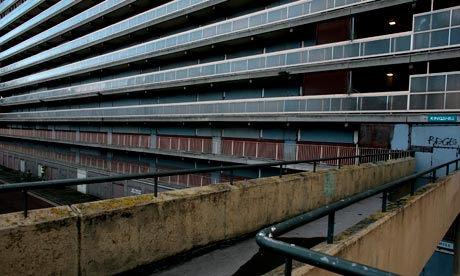
The location we used is very similar to several other locations in films that we had researched. For example, the locations seen in "Essex Boys" are drab concrete estates and bleak open spaces; the dystopian, claustrophobic city of Copenhagen seen in "The Killing" also helped to inspire us (especially the scene in the car park). Another influence was the music video Angel by Massive Attack as it is set in a carp park very similar to the one seen in Transit, and the angles used help to create tension and mystery. The location could also be similar to the sort of run down estates/industrial areas that groups of youths loiter and cause trouble around so this could help the target audience identify with the film because they may know areas around where they live that are like the locations shown in Transit. The locations seen in Transit are generic due to the claustrophobic atmosphere and dimly lit spaces; these sort of locations are very familiar/recognisable to the British audience. Members of the target demographic who like similar urban media products, such as "Top Boy" and "Harry Brown" will expect to see this sort of locations and so will be able to identify with the film more readily.
Car park and surrounding area seen in Transit
Heygate estate used in "Harry Brown" is very similar to the location used in Transit